
Non-Surgical Spinal Decompression Therapy In Phoenix AZ
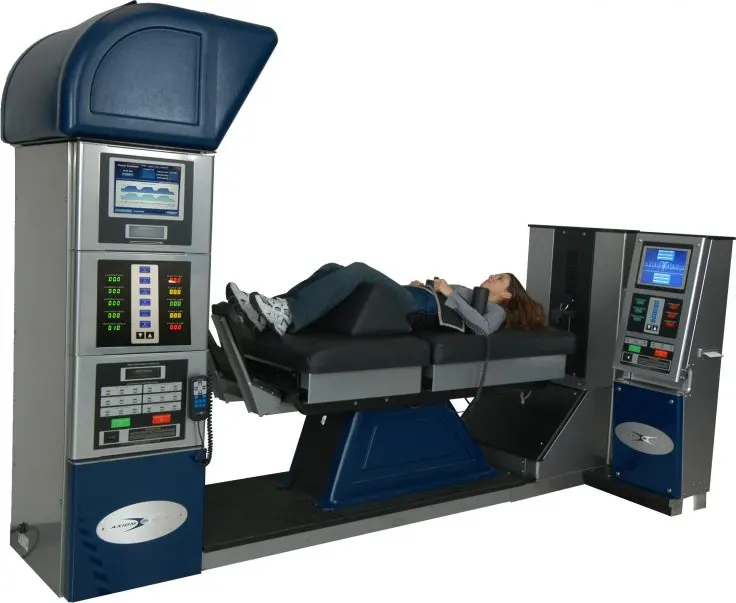
The DRX9000 is an FDA-cleared, non-surgical spinal decompression system used at Gonstead Physical Medicine in Phoenix, AZ to relieve pain from herniated discs, bulging discs, degenerative disc disease and sciatica. The clinic reports a 90 percent success rate across more than 30,000 patients treated, serving Phoenix, Glendale and Scottsdale.
What Is Spinal Decompression Therapy?
Spinal decompression therapy applies gentle, computer-controlled forces to the spine to relax the paraspinal muscles and maximize spinal elongation. This gently spreads the vertebrae apart to relieve pressure on the nerve, drops pressure within the disc, and facilitates the flow of nutrients and oxygen into the disc to support healing. The reduction in pressure can also help draw herniated disc material back in, reducing the size of a herniation or bulge.
Can Spinal Decompression Be Done Without Surgery?
Yes. Non-surgical spinal decompression, such as the DRX9000 used at our Phoenix clinic, is specifically designed as an alternative to spinal surgery. It relieves pain from low back pain, neck pain, herniated discs, disc extrusions, bulging or protruding intervertebral discs, degenerative disc disease and posterior facet syndrome, all without an incision or surgical recovery.
What Is The Success Rate Of Non-Surgical Spinal Decompression?
Our office has treated over 30,000 people with the DRX9000 and maintains a 90 percent success rate relieving neck and back pain. The DRX9000 uses high-speed treatment computers to calculate a precise treatment curve for each patient, and a Nested Closed-Loop Feedback System constantly monitors, measures and corrects the applied force thousands of times per second.
How To Decompress L4 And L5 At Home?
While gentle stretching and posture correction can offer temporary relief for L4-L5 disc stress, home methods cannot replicate the precise, computer-controlled decompression force delivered by a clinical system like the DRX9000. For a true reduction in disc pressure at L4-L5, in-office non-surgical spinal decompression under a doctor’s supervision is the safer and more effective option.
Can I Permanently Decompress My Spine?
Long-term relief is possible through a structured three-phase program: a stabilizing phase (typically around 20 visits over 7 weeks), a strengthening phase (6 to 12 visits over 12 weeks) that introduces rehabilitative exercises, and a maintenance phase (4 to 12 visits per year) to protect the results.
What Is The Success Rate Of L4-L5 Decompression Surgery?
Surgical outcomes vary by case and surgeon, which is why many patients in Phoenix, Glendale and Scottsdale explore non-surgical spinal decompression first. Our DRX9000 program has a 90 percent success rate without the risks, recovery time or costs associated with surgery.
$79 Disc Injury Special
Non-Surgical Spinal Decompression
- Consultation
- Free MRI Review
- X-Rays
- Dr’s Report of Findings
- Non-Surgical Decompression on Day 2 Appointment
Members of the Prestigious Top Doctors of Disc Centers of America

As Seen On




How Our Spinal Decompression Therapy Plan Works
Find It
Through our meticulous exam process we are going to find the root cause of your problem and show you exactly what is going on.
Fix It
We will develop a custom plan of attack using our comprehensive approach that won’t just have you feeling better in the short term but will give you the lasting results that you have been looking for.
Forget It
When you aren’t feeling 100% it is hard to focus on much else. Once we get you feeling and functioning better you will be able to forget all about your problem and get back to enjoying your life!
The Benefits Of Spinal Decompression Therapy With The DRX9000
- Targeted Spinal Decompression — precise, computer-controlled adjustments target the specific disc or vertebrae causing pain.
- Reduction Of Disc Pressure — creates a vacuum effect that helps retract herniated or bulging material and improves circulation of nutrients.
- Non-Surgical And Painless — a comfortable alternative to invasive spinal surgery.
- Improved Mobility — decompressed, rehydrated discs support better range of motion.
- FDA Cleared — meets recognized safety standards for medical use.
- Customizable Treatment — tailored to each patient’s condition, size and pain level.
- Minimal Side Effects — most patients report relief, with only rare temporary soreness.
- Supports Natural Healing — creates the space and conditions the disc needs to recover.
Physiotherapy Rehabilitation Phoenix AZ
Spinal decompression is frequently paired with physiotherapy rehabilitation to strengthen the muscles supporting the spine and prevent the disc injury from returning. This physical medicine and rehabilitation approach combines decompression, targeted exercises, massage therapy and, when appropriate, electrical muscle stimulation and cold therapy.
Frequently Asked Questions
Is it good to decompress the spine? If your spine is compressing a nerve and causing pain, decompression is a non-invasive, natural option that restores alignment and speeds disc recovery.
What are spinal decompression treatments like? Quick, painless and relaxing, often leaving patients feeling instantly taller.
Can a chiropractor in Phoenix, AZ do spinal decompression? Yes, Gonstead Physical Medicine offers the DRX9000, a state-of-the-art decompression system with a 90 percent success rate.
Can spinal decompression cause damage? No. Decompression helps repair damage. Some patients feel mild, temporary muscle soreness, similar to a challenging workout.
What does a compressed spine feel like? Spinal compression irritates nearby nerves, causing headaches, neck pain or low back pain, and can also affect focus, energy, sleep and other body systems.
Schedule your spinal decompression consultation in Phoenix, serving Glendale and Scottsdale.




Additional Benefits Of Spinal Decompression Therapy With The DRX9000
How does the DRX9000 non-surgical spinal decompression system work?
The DRX 9000 applies forces along a treatment curve to elongate the spine without causing the muscles that guard the spine to contract. This advanced technology uses high-speed treatment computers to calculate the exact treatment curve for each patient.
A servo/motor amplifier (“servo-motion system”) takes the treatment curve and applies the forces to the patient. The servo-amplifier constantly checks (several thousand times per second) and corrects the servo-motor’s movement. Measurement devices inside the DRX 9000 monitor changes in the decompression force experienced by each patient. The computers calculate corrections and ensure the therapy is true to each patient‘s treatment curve. A Nested Closed-Loop Feedback System ensures constant monitoring, measuring, and correcting processes.
What is the DRX 9000 Treatment Protocol?
At Gonstead Physical Medicine, our treatment protocol for spinal decompression has three phases of care. As the patient’s spinal disc injury improves, the patient progresses from phase 1 to phase 3. The frequency of care depends on the severity of the spinal injuries and the patient’s health.
Phase 1: Stabilizing
This phase of care focuses on stabilizing the spinal disc and reducing or eliminating the patient’s symptom intensity, whether that be back pain, neck pain, numbness, or tingling. Phase 1 is typically 20 visits over a 7-week period.
Phase 2: Strengthening
This phase of care focuses on strengthening the area around the disc to prevent exacerbating the patient’s symptoms. During this phase, we introduce rehabilitative strengthening exercises. The frequency of phase 2 care depends on the severity of the spinal disc injuries of the patient. Phase 2 of care is typical 6 to 12 visits over a 12- week period.
Phase 3: Maintenance
This phase of care focuses on maintaining a healthy spinal disc and consists of periodic maintenance treatments to prevent further worsening of the patient’s condition. Phase 3 care depends on the severity of the spinal disc injuries of the patient and is typically 4 to 12 visits per year.
Frequently Asked Questions
What is spinal decompression?
Spinal decompression applies forces to the spine to relax the paraspinal muscles to maximize spinal elongation. Decompression gently spreads the vertebra apart to relieve nerve pressure. This drops pressure within the disc, facilitating the flow of nutrients and oxygen to the disc to assist in the healing process. Additionally, the reduction in pressure may help draw in herniated disc material, reducing the size of the herniation or bulging disc.
How long does spinal decompression take?
The frequency and duration of decompression therapy depend on the severity of your issue and your current health.
Is it good to decompress the spine?
If you are suffering from a disc injury, where your spine compresses your nerves, causing pain and dysfunction, decompression is an excellent, non-invasive, natural option for pain relief. It will help restore spinal alignment and speed up disc bulge or herniation recovery.
What are spinal decompression treatments like?
Quick, painless, and relaxing, leaving you feeling instantly taller.
Can a chiropractor in Phoenix, AZ do spinal decompression?
Gonstead Physical Medicine is lucky enough to have a state-of-the-art decompression system, the DRX 9000. The DRX 9000 has a 90% success rate in relieving neck and back pain.
Can spinal decompression cause damage?
No, decompression fixes damage. You may feel slight muscle soreness after a session, similar to after a challenging workout.
How effective is decompression therapy?
We have a 90% success rate at relieving neck and back pain using the DRX 9000 decompression system.
What does a compressed spine feel like?
Spinal compression is when your vertebrae irritate nearby nerves, causing pain and dysfunction. While pain is an indicator of nervous system stress – headaches, neck pain, low back pain – you may also experience dysfunction with other body systems – cardiovascular, respiratory, digestive, and reproductive – and issues with focus, cognition, energy, sleep, and your senses.
$79 Disc Injury Special
Non-Surgical Spinal Decompression
Consultation, Free MRI Review, X-Rays, Dr’s Report of Findings, Decompression on Day 2 Appointment
